🎖️ Veterans & First Responders receive 10% OFF all Services!

✖
🐾 Dog Owner Guide · Frisco, TX

Leaving Your Dog Home Alone While You’re at Work

Heading back to the office, starting a new job, or just bringing home a new dog? One of the most common questions we hear from Frisco dog owners is how long it’s okay to leave a dog home alone, and how to make those long workdays easier on them.

As a local dog walking and drop-in visit company in Frisco, we spend our weekdays letting dogs out while their owners are at work. Below is how long dogs can comfortably be left alone, how to set yours up for a calm day, and when a midday potty break makes all the difference.
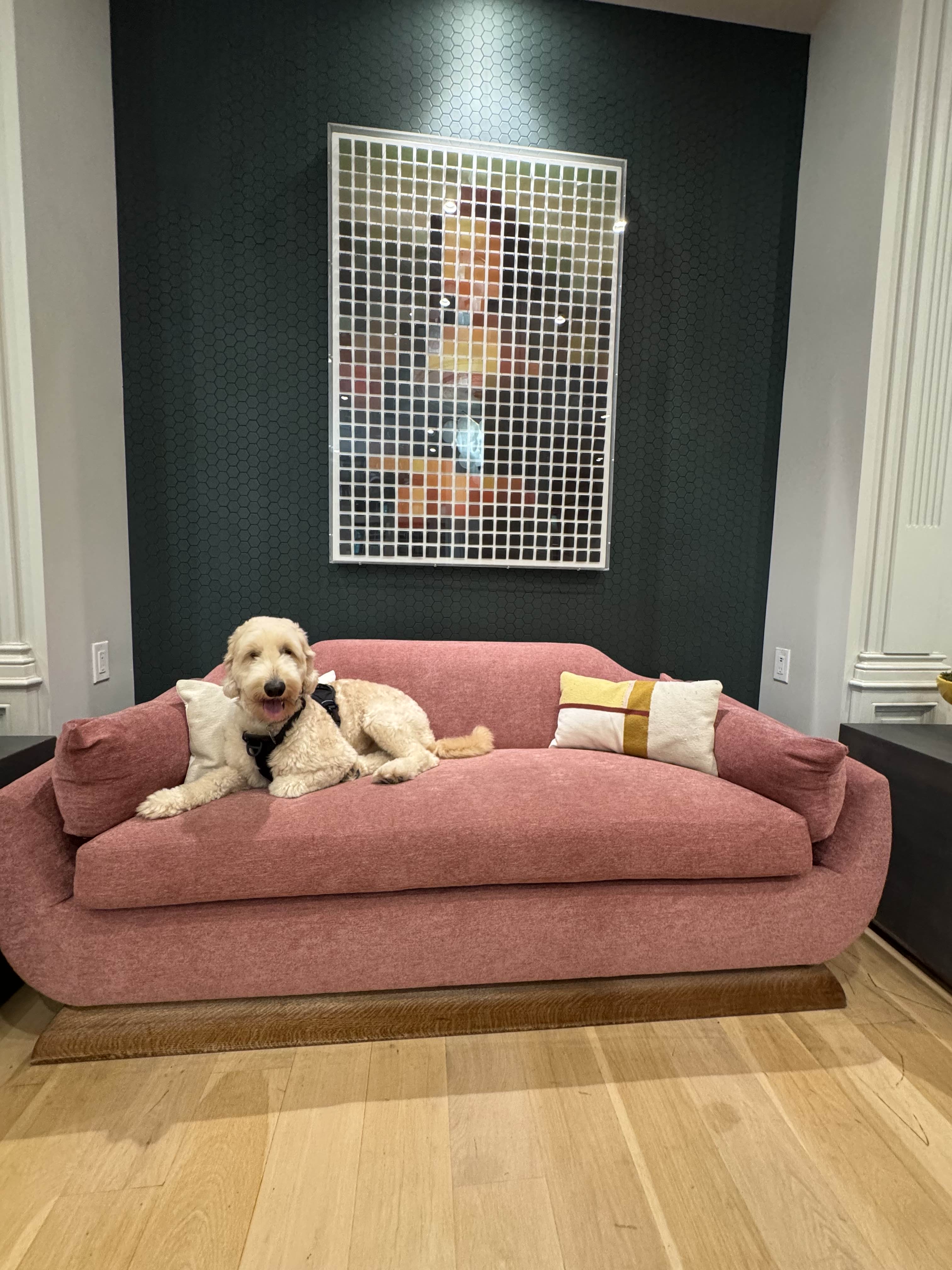
Dog greeting a Paws in Stride sitter during a midday drop-in visit in Frisco, Texas

The short answer

Most healthy adult dogs do best with a potty break at least every 4–6 hours. Puppies and senior dogs need to go out more often. If your workday plus your commute keeps your dog home alone for 8 hours or more, a midday drop-in visit or walk keeps them comfortable, less bored, and much less likely to have accidents.

Every dog is different: the times below are common, conservative guidelines, not hard rules. Age, size, health, and energy level all play a part. If your dog has a medical condition, takes medication, or was just adopted, ask your veterinarian what’s right for them.

How long can a dog be left alone?

Comfortable time alone between potty breaks, by age.

  1. Puppy (2–3 months)Tiny bladders, still learning potty habits 1–2 hours
  2. Puppy (4–6 months)Rule of thumb: about one hour per month of age, plus one 2–4 hours
  3. Adult dogComfortable for most, but 8 hours is a long stretch 4–6 hours
  4. Senior dogOften need to go out more, and may have health needs 2–6 hours

The catch for working owners: an 8-hour workday plus a commute in DFW traffic usually means 9–10 hours away from home. Even a dog who can physically “hold it” that long is often bored, restless, and uncomfortable by the time you walk in the door.

8 ways to set your dog up for a calm workday

Tap a step to jump to its details.

  1. Exercise before you leaveA tired dog is a calm dog Before you leave
  2. Last potty break on the way outStart the day on an empty bladder Before you leave
  3. A safe, comfortable spaceCrate, gated room, or dog-proofed area Home setup
  4. Leave something to doPuzzle feeders, lick mats, frozen toys Home setup
  5. Fresh water and the A/C onNon-negotiable in North Texas Home setup
  6. Dog-proof the spaceCords, shoes, trash, and anything toxic Home setup
  7. Keep goodbyes calm and boringLeaving shouldn’t feel like a big event Peace of mind
  8. Break up the day with a midday visitTurn one long stretch into two short ones Peace of mind
  1. Exercise before you leave

    Before you leave
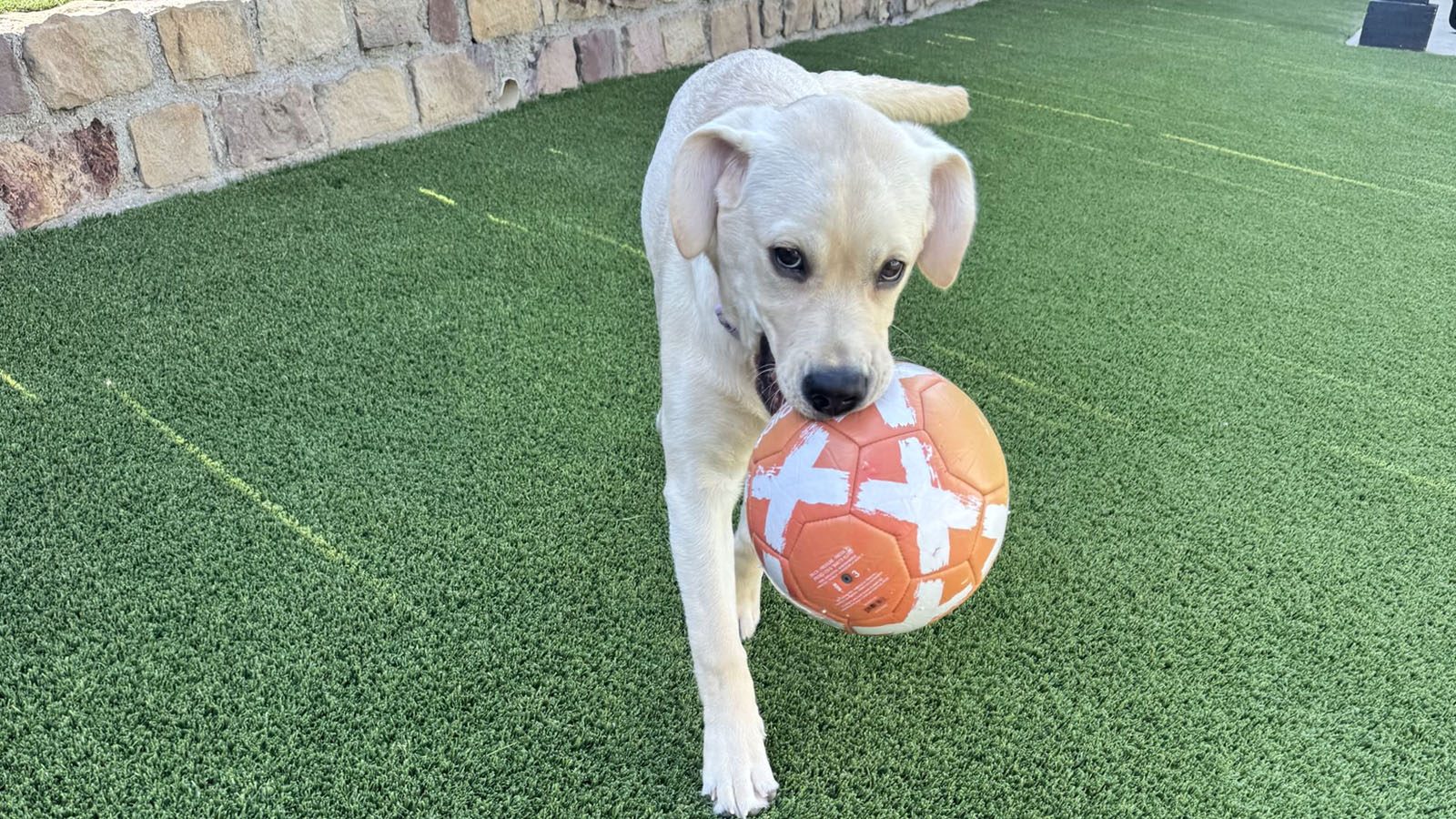
    Yellow Lab puppy playing fetch with a soccer ball in a Frisco backyard

    A dog who has burned off some energy in the morning is much more likely to settle in and nap while you’re gone. It doesn’t have to be long. Even a 20–30 minute walk, a game of fetch in the backyard, or a short sniff around the block helps.

    Why it helps

    Physical and mental exercise takes the edge off restlessness, chewing, and barking in the first few hours alone.

    Try this

    Let your dog sniff on the morning walk. Sniffing is mentally tiring, so a slower walk can wear them out more than a fast one.

  2. Make a potty break the last thing you do

    Before you leave

    Time your dog’s last trip outside for right before you walk out the door, not 45 minutes earlier while you’re getting ready. Starting the day with an empty bladder buys your dog the most comfortable stretch possible.

    Why it helps

    Every minute between that last potty break and your departure comes straight out of your dog’s comfortable window.

    Try this

    Feed breakfast early enough that your dog has time to go before you leave. Many dogs need to go 20–30 minutes after eating.

  3. Give them a safe, comfortable space

    Home setup
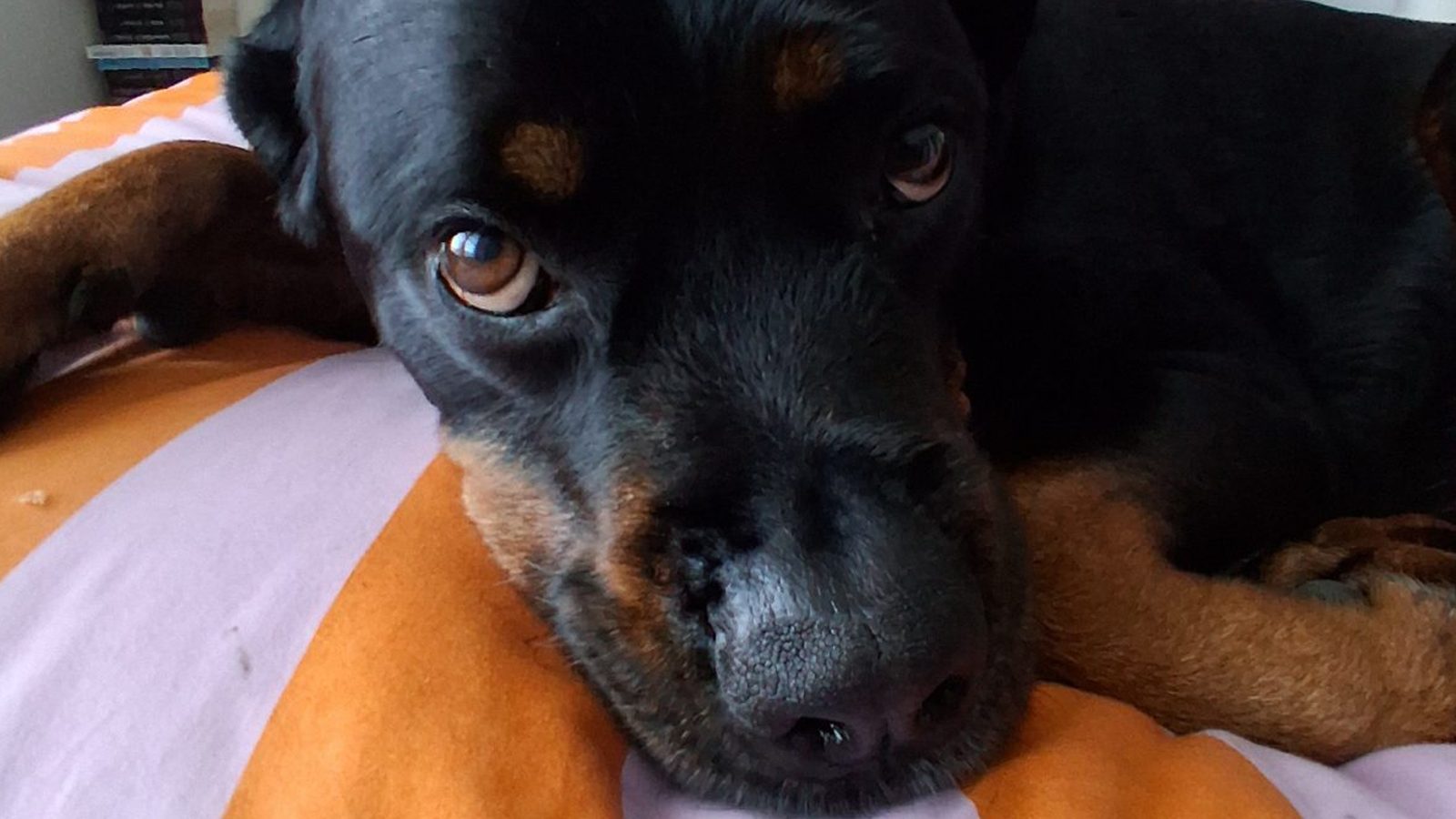
    Rottweiler relaxing on a cozy bed at home

    Some dogs love their crate; others do better in a dog-proofed room or behind a baby gate. Pick the setup your dog is most relaxed in, and add a comfy bed, a favorite toy, and a spot away from busy windows if they tend to bark at passersby.

    Why it helps

    A smaller, familiar space feels secure to many dogs and keeps them out of trouble while you’re gone.

    Good for

    Puppies, newly adopted dogs, and dogs who are still learning house rules.

    Crate tip: crates are great for shorter stretches, but most adult dogs shouldn’t spend an entire workday crated without a break. If your dog is crated, a midday visit to let them out to potty and stretch makes a big difference.

  4. Leave them something to do

    Home setup

    The first hour after you leave is often the hardest for anxious dogs. A long-lasting chew or food puzzle gives them something positive to focus on while the house goes quiet.

    Why it helps

    It keeps minds busy, builds a positive association with you leaving, and helps prevent boredom chewing.

    Try this

    Puzzle feeders, lick mats, or a stuffed toy frozen overnight. Rotate them so they stay interesting.

  5. Always leave fresh water and the A/C on

    Home setup

    Fill a clean water bowl (or two) before you leave, and use a heavy or spill-proof bowl if your dog likes to tip them over. And in Texas, never turn off the A/C for your dog’s workday to save on the electric bill.

    Why it matters

    Homes heat up fast in North Texas, especially upstairs rooms and spaces with big, sunny windows.

    Try this

    A smart thermostat or pet camera with a temperature reading lets you check on things from work.

    Local tip: summer power outages and storm days happen in Frisco. If you’re ever unsure your home is staying cool, a midday check-in is the easiest way to know your dog is comfortable.

  6. Dog-proof the space

    Home setup

    Walk through your dog’s space at their eye level. Put away shoes, phone chargers, cords, trash cans, medications, and anything chewable or toxic, and close the doors to rooms they shouldn’t be exploring.

    Why it matters

    A bored dog will find something to chew, and some household items can mean an emergency vet visit.

    Watch for

    Counter food, sugar-free gum, grapes, chocolate, and cleaning products left within reach.

  7. Keep goodbyes calm and boring

    Peace of mind

    It’s tempting to give a big, emotional goodbye, but it can make leaving feel like a big deal. A quick, calm exit and a low-key return teach your dog that you coming and going is just a normal part of the day.

    Why it helps

    Calm departures lower the stress that builds up before you leave, especially for dogs with separation anxiety.

    Try this

    Wait to greet your dog until they settle when you get home, and practice short departures on weekends.

  8. Break up the day with a midday visit

    Peace of mind
    Rottweiler resting on the bed waiting for its owner to come home

    This is the one that makes the biggest difference. A midday visit splits one long, lonely day into two short, easy stretches. Your dog gets a potty break, fresh water, attention, and a little play, and you get a photo update on your phone instead of wondering how they’re doing.

    At Paws in Stride, drop-in visits are built for exactly this. If your dog has more energy to burn, a midday dog walk gets them out in the neighborhood and comes with a GPS-tracked route so you can see exactly where they went.

    A great fit if

    You’re gone 8+ hours (with your commute), you have a puppy or senior dog, your dog needs a midday meal or medication, or you’re noticing accidents, chewing, or barking.

    Every visit includes

    A potty break, fresh water, feeding if needed, playtime and attention, photo updates while we’re there, and a visit report when we’re done.

    1. 15-Minute Drop-InQuick potty break and fresh water $30
    2. 30-Minute Drop-InPotty break, feeding, and playtime $40
    3. 60-Minute Drop-InExtra time for high-energy pups $60

    Weekday deal: drop-ins are a recurring service with a 3-day-per-week minimum. Book 5 or more days a week and save 12%, perfect for a regular Monday–Friday work schedule.

Signs your dog is struggling while you’re gone

Dogs can’t tell us their day was too long, but they show it.

Accidents in the house

Especially from a dog who is otherwise house-trained. This is the clearest sign the stretch is too long.

Chewing, digging, or scratching

Doors, blinds, furniture, or crates. Destruction is often boredom or stress, not bad behavior.

Barking or howling

Your neighbors, apartment manager, or HOA may mention it before you ever notice it yourself.

Over-the-top greetings

Nonstop zoomies and jumping the second you walk in usually mean a lot of pent-up energy.

Restless evenings

Trouble settling at night because they never burned off their energy during the day.

Stress when you get ready to leave

Drooling, pacing, or panting as you grab your keys can point to separation anxiety. Talk to your vet or a trainer.

What it usually means

If you’re seeing these regularly, your dog usually needs one of two things: more exercise before you leave, or a break in the middle of the day. Often it’s both.

Frisco-specific things to plan for

Leaving a dog home in North Texas comes with a few extra considerations.

☀️ Texas heat

Summer afternoons can be brutal. Midday potty breaks should be quick and shaded. If you can’t hold the back of your hand on the pavement for 7 seconds, it’s too hot for paws.

⛈️ Spring storms

Thunder and severe weather can scare dogs who are home alone. An interior room, background noise, and a midday check-in help nervous pups.

🏢 Apartments & HOAs

Barking complaints are common in apartments and close-together neighborhoods. A midday break that burns energy is one of the easiest fixes.

🚗 Long commutes

A “quick” drive down the Tollway or 121 can easily add an hour or more to your day, and your dog feels every minute of it.

A sample workday schedule

What a balanced day can look like for an adult dog with a full-time working owner.

  1. Morning walk or play sessionBurn off energy before the day starts 6:45 AM
  2. Breakfast, then a calm settle-downGive them time to digest and go 7:15 AM
  3. Last potty break and a low-key goodbyeHand off a puzzle toy on the way out 7:45 AM
  4. Midday drop-in visitPotty break, fresh water, play, and photo updates 12:00 PM
  5. You’re home: evening walk and dinnerTime to reconnect and stretch their legs 5:30 PM
  6. Last potty break before bedSet them up for a full night’s sleep 9:30 PM

The difference one visit makes: that single 12:00 PM drop-in turns a 10-hour stretch alone into two easy 4–5 hour stretches.

Home alone questions

Is it okay to leave my dog home alone for 8 hours?

Some adult dogs can manage it once in a while, but 8 hours plus a commute is a long time without a potty break, company, or exercise. For an everyday routine, most dogs are much happier with a midday break.

Should I crate my dog while I’m at work?

Crates can be a safe, cozy space, but most adult dogs shouldn’t spend an entire workday crated without a break. If your dog is crated, a midday visit to let them out to potty and stretch makes a big difference.

What’s the difference between a drop-in visit and a dog walk?

A drop-in visit focuses on a potty break, fresh water, feeding, and playtime at home. A dog walk is focused on exercise out in the neighborhood and includes a GPS-tracked route. Both include photo updates.

How much does a midday potty break cost in Frisco?

At Paws in Stride, drop-in visits are $30 for 15 minutes, $40 for 30 minutes, and $60 for 60 minutes. Clients who book 5 or more days per week save 12%. See our services and rates for full details.

What areas do you serve?

We serve Frisco, Prosper, Celina, and Little Elm, Texas. Not sure if you’re in our area? Reach out and we’ll let you know.

How do I get started?

Every new client starts with a free meet & greet, so we can meet your dog, learn their routine, and get everything set up. Register here to schedule yours.

Make Your Dog’s Workday Easier

At Paws in Stride, we provide midday drop-in visits and potty breaks and dog walking in Frisco, plus pet sitting and boarding. Every visit comes with photo updates, so you can stop wondering how your dog is doing and get back to your day.

Serving Frisco, Prosper, Celina, and Little Elm, including Starwood, Newman Village, Phillips Creek Ranch, The Hills of Kingswood, and Grayhawk.

More guides for Frisco dog owners

Looking for things to do with your dog on your days off? Check out our local guides: 8 Best Dog Parks & Trails in Frisco, 8 Best Dog-Friendly Restaurants in Frisco, and Dog Walking in Frisco, TX.